


THE COLLECTORS’ JOURNAL · PIEMONTE
Pale in colour, formidable in structure. Few grapes are quite so full of contradictions.
Pour a mature Barolo next to a young Cabernet Sauvignon and, judging by colour alone, you might assume the Italian wine was the lighter of the two. Taste them, and that assumption can quickly disappear.
Nebbiolo challenges some of the most familiar conventions of fine wine. Colour tells us remarkably little about its structure, its most celebrated vineyards have no official quality ranking, and some of its greatest producers deliberately refuse to bottle their vineyards separately.
01 /
One of the palest reds has some of the strongest tannins
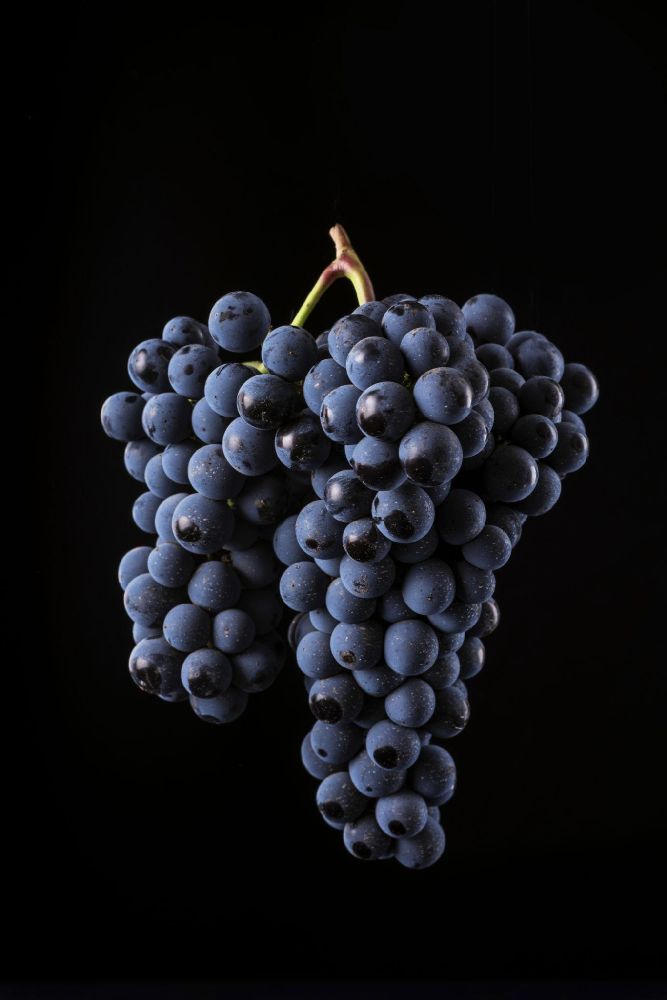
A comparative study of five red grape varieties, published in 2022, found something remarkable about Nebbiolo.
Of the wines examined, Nebbiolo had the lowest concentration of anthocyanins, the pigments responsible for red wine’s colour, but the highest tannin concentration. Its tannin content was approximately 162% higher than that of Pinot Noir.
The ratio of tannins to anthocyanins was sixteen to one. None of the other varieties studied exceeded two to one.
This unusual chemistry helps explain why a young Barolo can already display garnet and orange hues while remaining fiercely tannic.
For collectors, there is an important distinction here: a brownish rim on a thirty-year-old Nebbiolo is not necessarily the warning sign it might be in a wine made from another grape variety.
02 /
Barolo’s most famous vineyard is older than Barolo itself
In a private collection in the town of Bra, there is a historic label bearing the inscription Cannubi 1752.
It predates the emergence of Barolo as we know it today and Bordeaux’s famous classification by more than a century.
The reputation of particular vineyard sites was already established long before the modern appellation system existed.
Today, Barolo has officially recognised geographical designations known as Menzioni Geografiche Aggiuntive, or MGAs. Unlike Burgundy, however, these vineyards have no official Premier Cru or Grand Cru hierarchy.
Cannubi, Brunate, Monprivato and Vigna Rionda all enjoy extraordinary reputations, but their standing is determined by history, producers and the market rather than a formal ranking.
A wine such as Barolo Cannubi 2003 offers an interesting encounter between one of Barolo’s most historic vineyards and one of Europe’s hottest growing seasons. A celebrated vineyard does not erase the character of a vintage. It interprets it.
Bordeaux fixed its hierarchy in 1855. Barolo mapped its vineyards without creating one.
03 /
The difference between Barolo and Barbaresco is not the grape
Both appellations require 100% Nebbiolo. Yet their regulations impose quite different minimum maturation periods.
Barolo must spend at least 38 months ageing before release, including 18 months in wood. Barbaresco requires 26 months, including nine in wood.
It is tempting to conclude that Barbaresco is simply the lighter, earlier-drinking version of Barolo. Anyone who has tasted a young Montestefano or Rabajà might disagree.
The shorter legal maturation period does not establish a shorter lifespan. Differences in exposure, elevation, soil, harvest conditions and producer philosophy are far more revealing.
An exceptional Barbaresco can comfortably outlive a mediocre Barolo, irrespective of what the regulations suggest.
04 /
Nine vineyards, one winemaker
In 1958, a parish priest brought together nineteen growers to establish Produttori del Barbaresco.
The cooperative would eventually provide wine lovers with one of the most fascinating comparative tastings in Italy.
Since 1967, in suitable vintages, it has produced nine separate vineyard Riservas. Each is made according to the same winemaking philosophy and aged in large oak casks.
Asili, Ovello, Montefico, Montestefano and the other crus can therefore be compared without the substantial differences in winemaking that normally complicate such tastings.
Even more interestingly, when conditions across the growing area are considered unsuitable for the Riservas, the cooperative does not release the nine separate wines.
Fruit from prestigious vineyards can instead contribute to its regular Barbaresco.
For collectors, that makes the absence of a vineyard name on the label potentially more interesting than it initially appears.
05 /
The men who refused to make single-vineyard Barolo
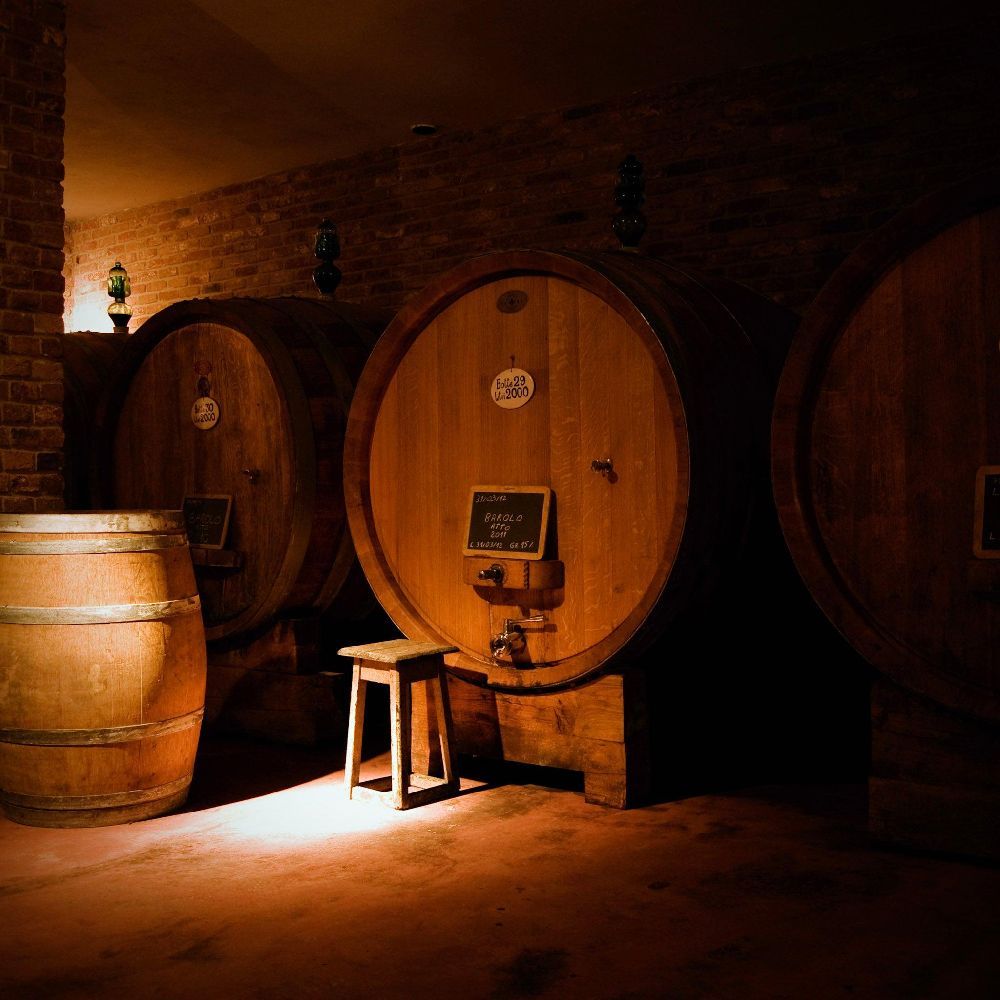
While individual vineyard names became increasingly important to the international wine market, Bartolo Mascarello refused to follow the trend.
He believed that combining the qualities of several different vineyards produced a more complete Barolo.
His opposition to modern winemaking techniques became so famous that he illustrated some of his labels with the words “No Barrique, No Berlusconi”. Today, those bottles are collectors’ items in their own right.
Giuseppe Rinaldi shared much of that philosophy.
His Barolo Brunate Le Coste 2007 belongs to an era before the introduction of stricter geographical labelling rules, which changed the way Rinaldi could name his wines.
For collectors, these older labels represent not only a particular wine, but also a chapter in Barolo’s history that can no longer be reproduced in quite the same way.
The irony is that some of the most sought-after Barolos in the world owe their identity not to the isolation of a single celebrated vineyard, but to the deliberate combination of several.
06 /
When is Nebbiolo actually ready to drink?
The maturation requirements of Barolo tell us when a wine may legally be sold. They tell us nothing about when it should be opened.
A structured vintage such as 1996 can still show remarkable firmness after thirty years, while wines from the more generous 1997 vintage may have reached their most expressive phase considerably earlier.
The same applies to producers. Longer macerations, extraction methods and the choice of maturation vessel can profoundly influence a wine’s evolution.
There is no universal drinking window for Barolo. Nor should an older vintage automatically be considered ready simply because of its age.
With mature Nebbiolo, the producer, vineyard, vintage and provenance deserve to be considered together.
A bottle such as Produttori del Barbaresco 1979 offers a particularly compelling perspective. Nearly half a century after harvest, it challenges the notion that Barbaresco should be regarded as Barolo’s less ageworthy sibling.
Perhaps the most interesting thing about mature Nebbiolo is how often it proves our assumptions wrong.
BELGIUM WINE WATCHERS
Explore Piemonte through its historic producers, celebrated vineyards and mature vintages.